
An Introduction to Feminist Therapy
I first began to view feminism as something that could be integrated into therapy when I was a therapy client myself. For several years, I worked with an amazing therapist who would frequently bring my attention to anxieties, roles, responsibilities, or beliefs that were informed by patriarchy or capitalism. Even as someone who studied sociology in undergrad, and then social work in college, I hadn’t realized just how deeply the socialization of gender norms and roles ran for me personally. It was very eye-opening, had an incredible impact on my understanding of where certain beliefs or “shoulds” come from, and ultimately made me feel less personally responsible for not living up to the unrealistic standards our society sets.

Feminist therapy isn’t a modality…rather, it is a lens that client and therapist can use to examine client experience within the context of the systems they are part of, and based on the identities they hold.
So what is feminist therapy?
Feminist therapy is not a therapy modality in the traditional sense. It doesn’t include a specific set of learned skills or strategies in the same way that something like Cognitive Behavioral Therapy does. Rather, it is a lens that client and therapist can use to examine the client’s experience within the context of the systems (political, religious, relationship, family, etc.) they are part of, and based on the identities (race, gender, sexuality, economic status, etc) they hold.
This lens is also a non-pathologizing way of examining mental health symptoms. In feminist therapy, symptoms can often be viewed as an understandable reaction to harmful systems and the beliefs they perpetuate, or to lived experiences of injustice, rather than an “illness” that needs to be “cured” or “fixed”.
It is also important to acknowledge that a feminist lens examines MANY forms of social inequity and injustice, not just those related to gender or sex. This can include race, sexuality, socio-economic status, age, ability, etc.
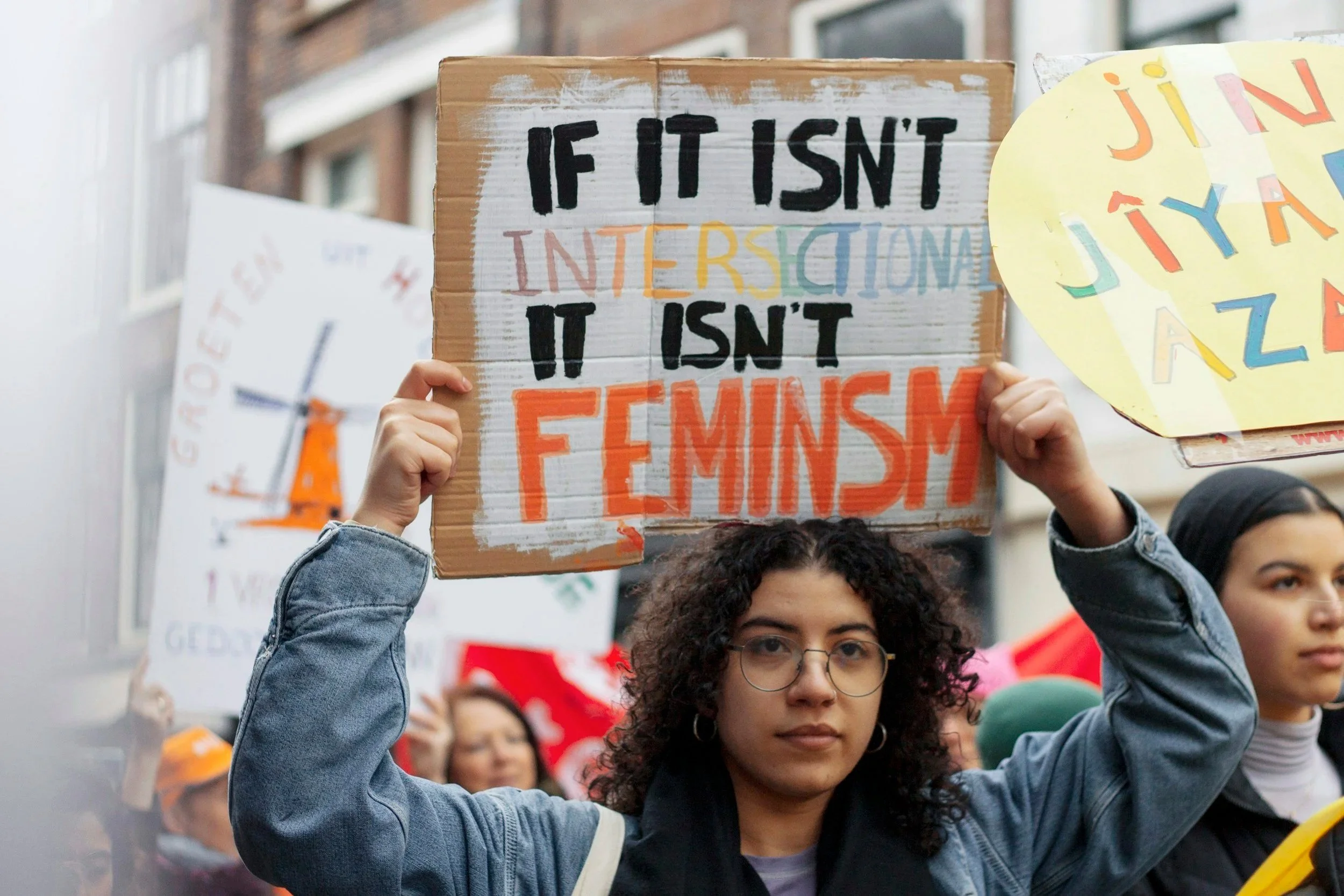
The Importance of Intersectionality
Intersectionality is a term coined by critical race theorist Kimberlé Crenshaw. It encapsulates the idea that when people possess more than one marginalized identity (e.g. Black women, trans women, etc), their experiences are unique and often the injustices they experience are compounded, due to the “intersection” of these multiple identities.
When feminism is intersectional, it is also generally more inclusive of marginalized groups that the traditional feminism of the 20th century didn’t embrace or include.
So what could it look like to use a feminist lens in therapy?
There are so many ways that a feminist lens can be utilized in therapeutic work, but here are some examples:
Naming and validating client experiences of injustice (“What you experienced was indeed [racism, gender-based discrimination, transphobia, etc] and your feelings of hurt and anger are extremely valid.”)
Putting client experiences in the context of a larger system (burnout not as a sign of individual failure, but a product of of capitalist ideas of work—capitalism being the larger system we exist within)
Examining how patterns of behavior are learned through socialization we receive based on our identities (e.g. women being socialized to feel hyper-responsible over the feelings and needs of others, or automatically taking on the majority of the mental load related to running a household)
Acknowledging that our mental health and suffering are linked to the social, political, economic systems we are part of (eg depression related to poverty/lack of resources)
Me acknowledging my privilege (as a cis white woman) and lack of understanding in session, while continuing to validate client experiences of injustice and systemic oppression